Want to write a newsletter that gets results and put the power of direct marketing to work driving your business?
Want to write a newsletter that gets results and put the power of direct marketing to work driving your business? Human psychology is complex, but to create effective marketing content we have to understand it.
A newsletter is a powerful tool, so let's get to work! First, let's dive into the world of marketing tricks and persuasion, and learn how to get people to notice your email. Below are 13 strategic tricks that will turn your newsletter into a two-way communication channel.
1. GIVE PEOPLE A REASON TO SUBSCRIBE TO YOUR NEWSLETTER
For conversions to succeed, your main tool is a list of active subscribers. But how do you get people to act? A simple call such as "subscribe to our newsletter" is no longer enough. Creating a sense of greater value, and of trust, are the psychological triggers that make people take action.
Give your subscribers a sense of value and show them you care about them! Offering new newsletter subscribers a discount on a service or a purchase is only the beginning.
The process of creating value doesn't stop there – this is where creativity really starts. Give your followers special access to exclusive offers and promotions, discounts and VIP information.
A promising newsletter is a travelling platform that behaves like a net cast into the ocean, just waiting for the next catch. It's a somewhat blunt comparison, but it sums up how a persuasion-driven market works.
Shape your creative approach around your business and your service. For example, an airline could offer priority boarding to customers who subscribe to its newsletter.
Similarly, a publisher could offer newsletter subscribers free e-book downloads or free access to online seminars. If you organise events, you could give newsletter subscribers reserved parking or free entry. The range of possible offers is truly wide, and your imagination is the only limit.
Think outside the box, because more subscribers means more chances to turn subscribers into customers.
2. FOCUS ON YOUR GOAL
What do you want to achieve with your newsletter?
First ask yourself what you want to achieve, then build a strategy for attracting new users. A concise, detailed approach can become a magnet, so plan and aim.
Some common goals of an email newsletter:
- Driving sales
- Growing your social media presence
- E-book downloads
- More visits to your website
- Promoting a new product or service
There are countless goals, and they depend on your company. If you struggle to come up with ideas at first, use the goals above as a starting point.
Choose one goal and point your content towards it. If you try to combine several goals, keep in mind that they can overwhelm the reader and create exactly the confusion a newsletter should avoid.
Ambiguity is something to steer well clear of when writing a newsletter. The reader must know exactly where to go and what to do to answer your call. Finish with a clear call to action!
3. MAKE SURE YOUR EMAILS GET READ
An opened email means you've won the battle, but not the war. So how do you get people interested enough to open and read your email?
The key lies in a personal approach and interesting content.
We also recommend sending newsletters from an address that includes a person's name, for example IvanHorvat@gmail.com, and avoiding addresses such as users@gmail.com.
We live in a networked society where security and trust are central to any relationship. When people open their inbox they ask themselves: Do I trust the sender? Do I want to talk to them? Do I like what I received? Will this email be useful to me?
Human instinct naturally turns attention to the sender's first and last name.
Automated emails feel impersonal, so make the effort to create authentic, personal content throughout, so that the reader feels valued from the very first line.
4. WRITE A TEMPTING SUBJECT LINE
We have already established that you can't convert anyone if your email isn't opened, read and ultimately accepted by the recipient.
Besides a personal, authentic tone in the text itself, it's important to make the subject line stand out and appeal. The subject line is the recipient's first contact with your email, so it matters enormously – it can largely decide whether the email gets opened at all.
Look at the following data on the importance of a good subject line:
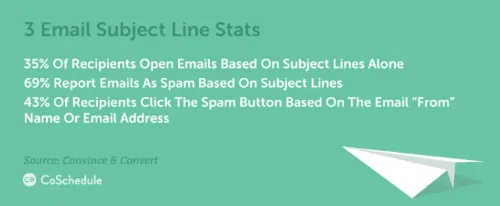
As you can see, the subject line can largely decide whether the recipient opens the email.
So how do you get recipients to open and read your newsletter? Start by making sure the opening isn't dull, dry information.
Statistics also confirm the importance of personalising emails: as many as 82% of marketers say the subject line affected their conversion rate.
One of the most common ways to personalise is to open the email with the recipient's name. You can also prompt quick action with phrases that put a time limit on special promotions and offers in the subject line. Likewise, most people react instantly to a Breaking news phrase and open the email.
Any content with positive words is welcome, because readers are drawn to content that offers a concrete solution to their problems or promises a happier life.
Be creative and intrigue the recipient – leave them no choice but one: to open your email! The subject line should spark curiosity and push the reader to open the email, because that is the only way to get the whole story. So build a hierarchy of information and create a journey through your newsletter.
For example, a B2B company could write a subject line like this: "How to double your sales in just 30 minutes?"
Another psychological trick for your newsletter is to ask recipients for help in the subject line. It may sound unusual, but this kind of content has proven very effective.
It is an example of intrigue that prompts action and then a response. The reader wonders why someone would need their help. That open question creates an opening to engage the recipient and lead them to subscribe to your newsletter, in other words to join your network.
Emojis can also stir emotions that activate the recipient. However, use judgement about when each tool fits, depending on the service or product you are promoting in your newsletter.
Here are some "power words" for inspiration:
- incredible
- shocking
- amazing
- surprising
- impressive
- fantastic
According to research by MailChimp, words that suggest a time limit can also have a big impact on open rates:
- urgent
- breaking news
- important
We've given you the idea – now it's your turn to be creative!